
Why Do Neck and Shoulder, Lower Back, and Knee Pain Keep Coming Back?
Many people have experienced something like this:
when the shoulder feels sore, we keep massaging the shoulder; when the lower back hurts, we keep pressing or massaging the lower back; when the knee feels uncomfortable, we use pain-relief patches, massage, or apply heat.
These methods may provide some relief at the time, but a few days later, the pain comes back again. Over time, many people begin to wonder: Is my muscle too tight? Is the strain too severe? Or will I have to live with this pain forever?
The truth is, sometimes the actual source of the problem may not be where you feel the pain.

Why doesn’t “where it hurts” always tell us where the problem is?
We can think of pain as a signal from the body. It is similar to a fire alarm in a building—the place where you hear the alarm is not necessarily where the actual problem is occurring.
The same applies to the human body. When one part of the body becomes painful, it may be related not only to a local injury or overuse,
but also to factors such as:
- Poor posture over a long period of time
- Prolonged sitting or standing
- Repetitive movements
- Long-term muscle tension
- Limited joint mobility
- Compensation from other parts of the body
Related.
Therefore, when pain keeps coming back, instead of only asking: “Where does it hurt?”, we can also ask: “Why does it keep hurting here?”
A Common Case: Why Does Neck and Shoulder Pain Keep Coming Back After Massage?
A common example is a patient who works in an office and spends several hours every day in front of a computer.
While working, the head tends to move forward unconsciously, while the shoulders may also become elevated and tense.
At first, the patient may only feel some mild soreness around the neck and shoulders. Over time, it may gradually develop into:
- Increasing tightness around the neck and shoulders
- Stiffness at the back of the neck
- Reduced ease of neck movement
- Occasional discomfort around the head
- Temporary relief after massage
Because massage provides temporary relief, the patient would massage the shoulders whenever the discomfort returned. After the massage, the shoulders would feel lighter and more relaxed. But a few days later, the pain would return.
Why does this happen?
Because the underlying issue may not simply be that “the shoulders are too tight.”
If the head and shoulders remain in the same position every day while working, the muscles around the neck and shoulders may continue to remain under tension. The area may feel relaxed after treatment, but after some time, the tension can gradually return.
It is like keeping your foot on the accelerator while expecting the car to slow down by itself.
Therefore, when dealing with this type of problem, it is important to look beyond the painful area. We may also need to assess the movement of the neck and shoulders, the condition of the chest and upper back, the movement of the shoulder blades, as well as the person’s long-term posture and daily movement habits.
Because the human body works as a whole.
Sometimes, the shoulder is simply the place that “speaks up” last.
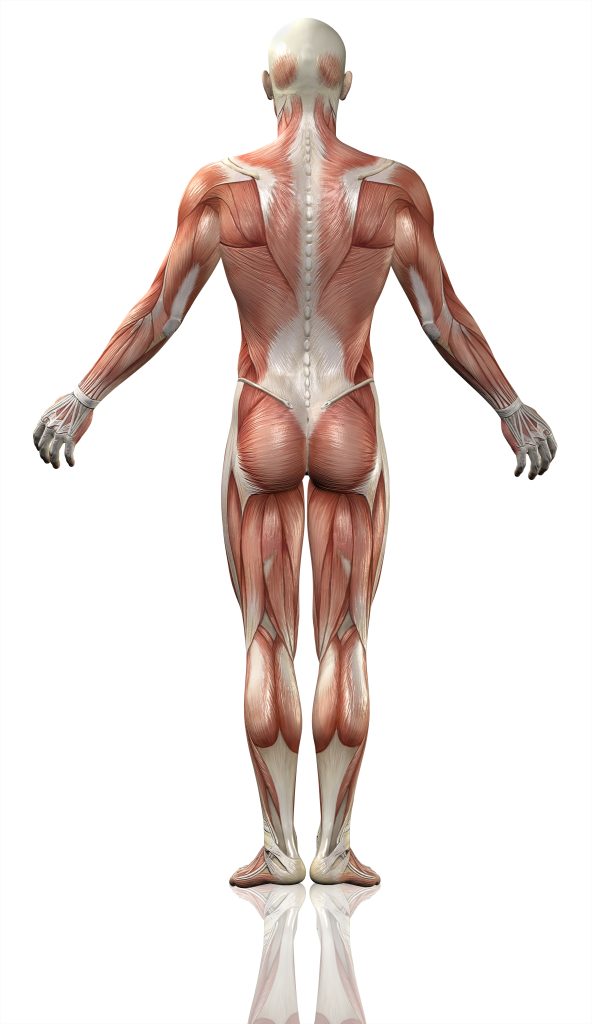
What Should We Really Pay Attention to When Dealing with Muscle and Tendon Problems?
Many people are used to the approach of “treat where it hurts.”
This approach can certainly provide temporary relief in some situations. However, if the pain continues to return, it is worth looking further into the possible factors behind it.
First, we need to understand why it hurts.
Was there a sudden injury? Or has there been long-term overuse? Is it related to excessive exercise? Or is it caused by performing the same movement repeatedly every day?
Second, we need to understand why the area remains tense.
Why does it seem unable to fully relax? Why does the tension return shortly after massage? Finally, we need to ask: “Why does the problem keep coming back?”
If we remain stuck in the cycle of: Pain → Massage → Temporary relief → Pain returns → Massage again then perhaps the real question is not simply: “How can we make it feel better?” but: “Why does this area keep needing to be massaged?”
Massage Is Not Bad, But We Shouldn’t Only Chase the Pain
Massage, heat therapy, and appropriate stretching can help relieve certain types of muscle tension and overuse-related discomfort.
However, if every episode of pain is treated by repeatedly focusing only on the painful area, without trying to understand why the pain keeps returning, we may remain trapped in the cycle of: Pain → Relief → Pain again
So when pain keeps returning in the same area, it may be helpful to look at the problem from a different perspective. Especially when the pain has lasted for some time or continues to return despite repeated treatment, instead of constantly chasing the pain, it may be more useful to explore the factors that could be contributing to its recurrence.
Muscle and Tendon Problems Are Not About “The More Painful, the More Effective”
Another common misconception is: “The more painful the massage is, the more effective the treatment must be.”
But this is not necessarily true. Treatment is not a competition to see how much pain a person can tolerate. When the body is already in a state of pain and tension, stronger or more aggressive stimulation does not necessarily mean better results.
What matters more is understanding where the problem may be coming from and choosing an appropriate approach. Different causes of pain, physical conditions, and levels of tolerance require different approaches. Treatment should not simply focus on making the stimulation as strong as possible.

Look at Pain from a Different Perspective
Pain can be a signal that a certain part of the body needs attention.
So when an area keeps hurting, don’t only ask: “Where does it hurt?”
Also ask: “Why does it keep hurting here?”
Don’t only think: “How can I make the pain go away quickly?”
Also consider: “Why does the pain keep coming back?”
When we begin to look for the factors behind recurring pain, the direction of further treatment and care can become clearer.
Remember: The Painful Area Is Not Necessarily the Starting Point of the Problem
Neck and shoulder pain does not always mean we should only look at the neck and shoulders, so as lower back and knee pain.
The human body works as a whole.
Sometimes, what needs attention is not the painful area itself, but the factors that are causing that area to work too hard or bear excessive load.
Therefore, when pain keeps coming back, it can be helpful to look at the body as a whole rather than focusing only on the location of the pain.
If You Are Experiencing Persistent Pain
If you are experiencing recurring discomfort in the neck and shoulders, lower back, knees, or other parts of the body, don’t simply put up with it or focus only on treating the painful area each time. It may be helpful to understand more about when the pain started, which movements make it worse, why it tends to return even after rest, and whether there may be long-term tension or compensation involving other parts of the body.
By identifying the factors that may be contributing to recurring pain, we can better understand the direction of further care and treatment.
If you are experiencing problems such as muscle and tendon injuries, muscle tightness, neck and shoulder pain, or lower back and back pain, you are welcome to visit Visions TCM. We will assess your condition based on your individual situation, look at your body as a whole, identify factors that may be related to recurring pain, and provide an appropriate, personalised approach to care.
It’s not just about treating “where it hurts.” More importantly, it is about understanding “why it keeps hurting.”
此文章还有以下语言版本:
 简体中文 (Chinese (Simplified))

