

🌼 Chrysanthemum: Fragrant Medicine for Eye Health and Inner Calm
A Folk Tale:
It is said that during the Song Dynasty, the renowned literary figure Su Dongpo often read late into the night, leading to eye fatigue and discomfort. A friend gave him Hangzhou white chrysanthemum tea, and after drinking it for several days, his vision became clear and his energy revitalized. From then on, a cup of chrysanthemum tea became part of his daily routine. Over the centuries, chrysanthemum has become a symbol of “nourishing the eyes and calming the mind.”
👥 Who should use chrysanthemum, and when?
In Traditional Chinese Medicine (TCM), chrysanthemum is sweet, slightly bitter, and slightly cold in nature. It enters the Lung and Liver meridians, and has the functions of dispelling wind-heat, clearing the liver, improving vision, and reducing liver fire.
✅ Suitable for:
- People with heavy eye use (e.g. students, office workers): relieves dryness and strain
- Those with excessive liver fire: symptoms include headaches, irritability, bitter mouth
- Early-stage wind-heat colds: sore throat, mild fever, runny nose
- Elderly with high blood pressure: chrysanthemum helps lower blood pressure and soothe liver yang
- Spring and autumn seasons: helps prevent seasonal wind-heat conditions
🌼 Harvest and Processing of Chrysanthemum
Main medicinal types include Hangju, Gongju, Chuju, and wild chrysanthemum.
🕰️ Harvest: Usually picked in autumn when the flowers are just blooming but not fully open — the peak time for active compounds.
🔥 Processing:
-
- Sun-drying or low-temperature drying: retains flower shape and fragrance, used in tea or decoction
- Steaming before drying: enhances efficacy for pill or powder forms
- Ground into powder: easier to blend with other herbs
In TCM, meticulous processing is never compromised. Every step is essential to preserving and enhancing the efficacy of herbal medicines.
💊 Medicinal Properties of Chrysanthemum
- Dispels wind-heat: for colds, headaches, fever
- Clears liver and improves vision: for red, painful, or blurred eyes
- Lowers blood pressure: especially in liver-yang rising types
- Anti-inflammatory and detoxifying: wild chrysanthemum is used for sores, throat inflammation
Modern studies show chrysanthemum contains flavonoids, essential oils, and amino acids with antioxidant, antibacterial, and antihypertensive properties.
🧑⚕️ How TCM doctors use Chrysanthemum in prescriptions
Chrysanthemum is often paired with other herbs:
- Chrysanthemum + Mulberry Leaf: treats wind-heat colds, soothes cough
- Chrysanthemum + Goji Berry: nourishes liver, enhances vision
- Chrysanthemum + Cassia Seed + Hawthorn: reduces lipids and blood pressure
- Chrysanthemum + Honeysuckle: clears heat and toxins, for throat ulcers and mouth sores
Doctors select chrysanthemum based on a patient’s constitution and condition. Not suitable for people with cold spleen and stomach.
📌 Consult a TCM doctor before use.
🍚 Chrysanthemum in Cuisine and Desserts
From ancient scholars to modern homes, chrysanthemum appears in both poems and kitchens:
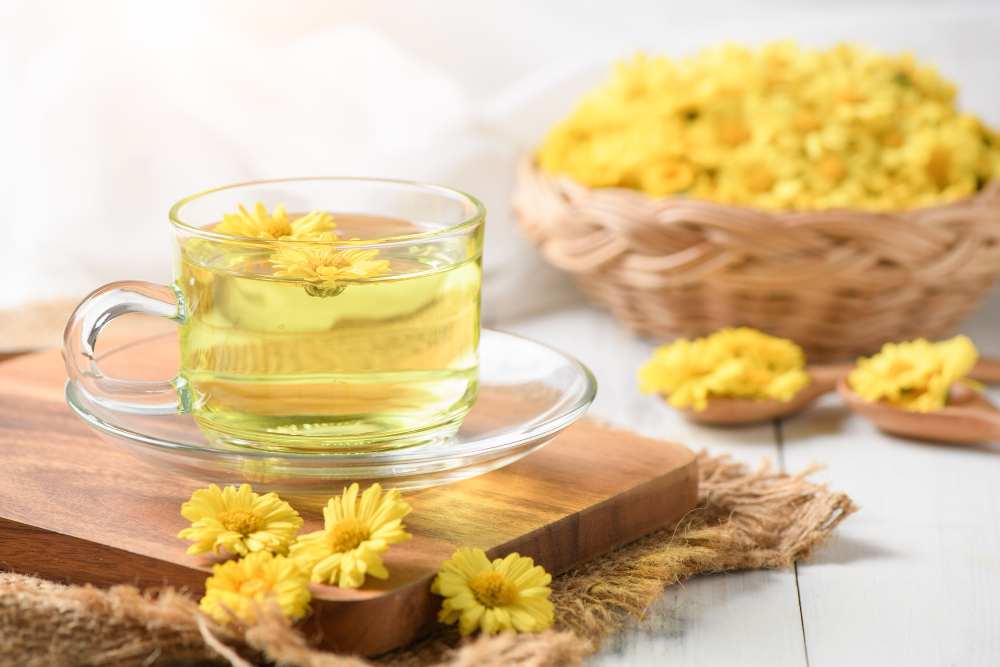
- Chrysanthemum Tea: fragrant, often paired with goji berries or honey
- Chrysanthemum Porridge: with glutinous rice, nourishes lungs and liver in autumn
- Chrysanthemum Cake: traditional soft pastry
- Chrysanthemum Wine: drunk during the Double Ninth Festival
- Chrysanthemum Tangyuan / Soup: modern dessert variation
These dishes preserve medicinal properties while integrating TCM into daily life.
📝 Conclusion
Chrysanthemum is more than a herb — it is part of cultural and medical heritage. From ancient palaces to modern homes, it soothes the eyes and calms the heart. Use it appropriately to enjoy its full health benefits.
If you’re feeling drained from staring at a screen all day, try a cup of chrysanthemum tea — and you may just feel the clarity and calm once praised by Su Dongpo.
此文章还有以下语言版本:
 简体中文 (Chinese (Simplified))
  Melayu (Malay)
