
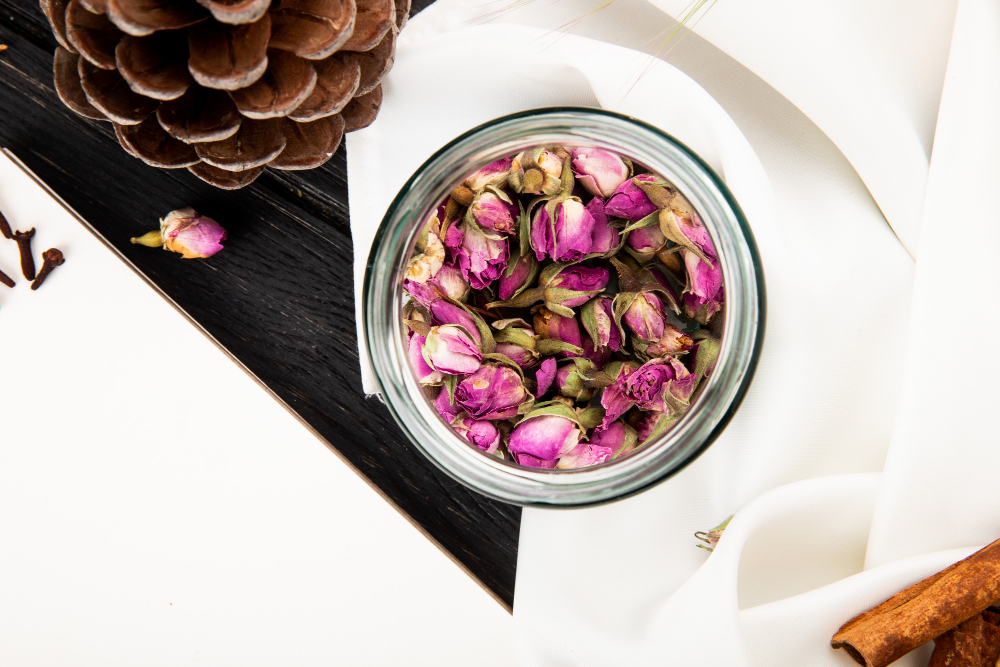
🌹“The Sacred Herb Among Flowers for Qi Regulation and Emotional Relief” —— From Garden Bloom to a Remedy for Body and Mind
A Short Story: A-Lian and the Rose Flower
In Tang Dynasty Luoyang, a young lady named A-Lian was emotionally distressed due to unresolved marriage matters. Her complexion turned pale and her appetite weakened. Her father, a court physician, once brought home a bundle of fragrant red roses. He brewed them into tea for his daughter. After drinking rose tea daily, A-Lian gradually became cheerful and radiant, and eventually found love. Villagers followed suit, and “Rose for Emotional Relief” became a known remedy.
👥 Who Should Use Rose Flower, and When?
TCM Properties:
Rose flower is sweet with slight bitterness, warm in nature, and enters the Liver and Spleen meridians.
Functions: Regulates qi, relieves emotional stress, activates blood, dispels stasis, regulates menstruation, and relieves pain.
✅ Suitable for:
- People under emotional stress or pressure
- Women with irregular menstruation or menstrual cramps
- Individuals with bloating or abdominal discomfort due to qi stagnation
- Those seeking beauty enhancement and better blood circulation
📅 Best Seasons:
- Spring: A time of renewal, ideal for soothing Liver qi
- Around menstruation: Eases premenstrual syndrome and promotes circulation
- During low moods or mental fatigue: Brew a pot of rose tea to calm and refresh the spirit
⚠️ Not suitable for:
- Pregnant women (especially in early stages), as blood-activating herbs may affect the fetus
- People with internal heat or excess fire (e.g., dry mouth, bitter taste, constipation) should use with caution
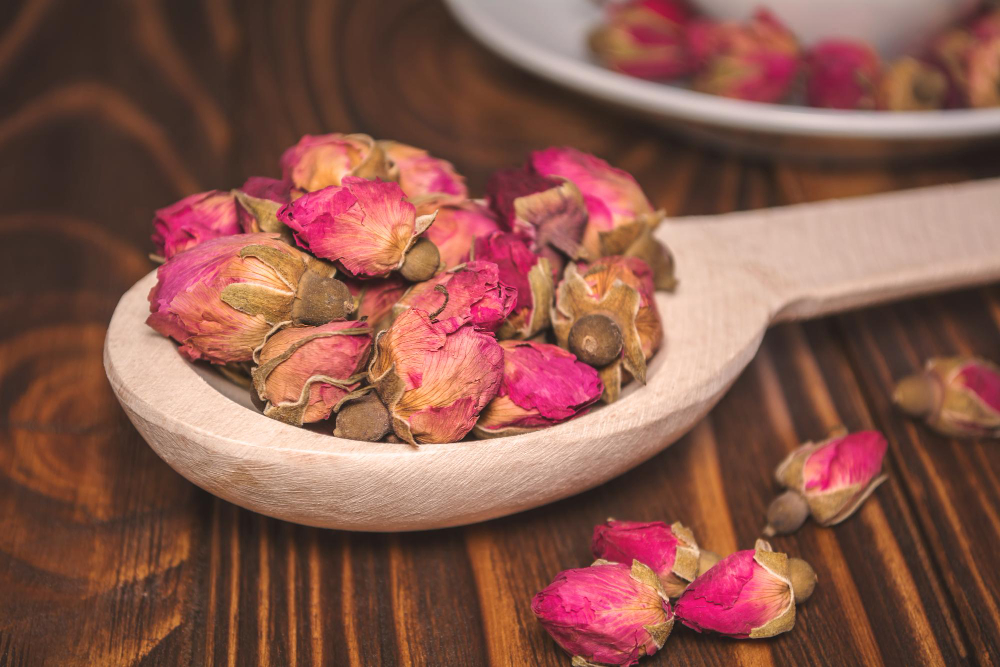
🌹 Harvesting and Processing of Rose Flower
🕰️ Harvest Time: May to June annually, when the buds just begin to bloom — this is when the fragrance and medicinal properties are at their peak.
🛠️ Processing Methods:
- Raw Rose Flower: Naturally sun-dried or low-temperature dried to retain aroma; commonly used for tea or culinary purposes
- Vinegar-processed Rose Flower: Stir-fried with rice vinegar to enhance qi-regulating and pain-relieving effects, ideal for liver qi stagnation or menstrual issues
During processing, handle with care to avoid damaging petals and preserve both aroma and efficacy.
💊 Medicinal Effects and Therapeutic Value
🌸 Traditional Chinese Medicine (TCM) Benefits:
- Regulates qi and relieves depression
- Activates blood and resolves stasis
- Harmonizes the Spleen and Stomach
- Enhances complexion by promoting blood flow
🔬 Modern Pharmacological Research:
- Contains essential oils, flavonoids, and polyphenols with effects like Antidepressant, antioxidant, anti-inflammatory, and liver-protective.
- Supports endocrine balance, improves sleep, and delays aging
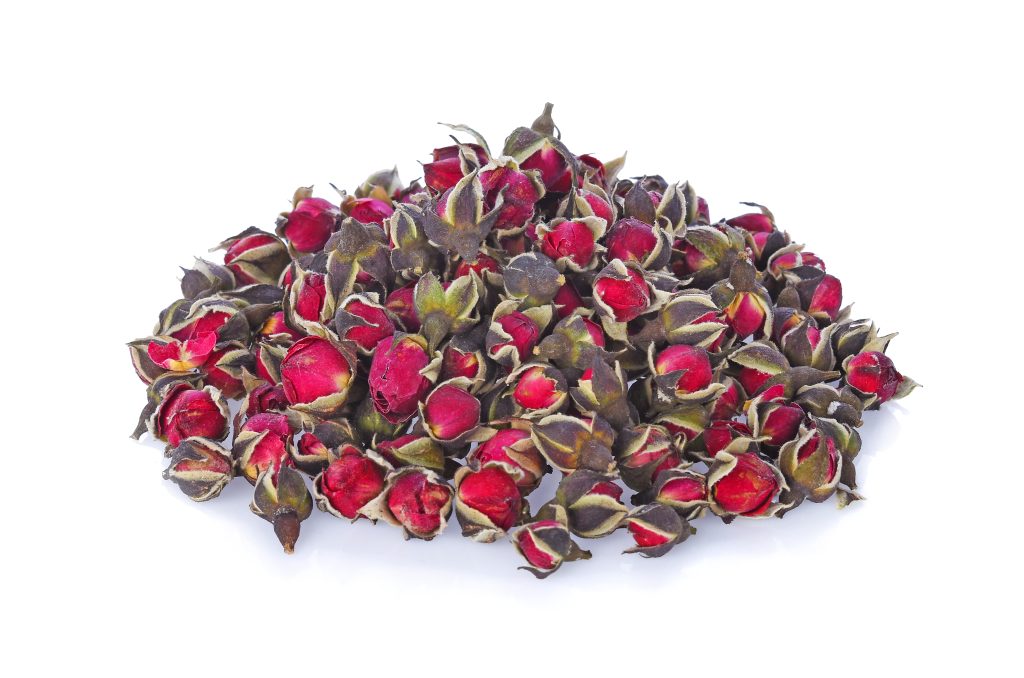
🧑⚕️ How TCM Practitioners Use Rose Flower?
In clinical practice, rose flower is commonly used in combination with other herbs to regulate emotions and menstruation:
- Rose + Cyperus (Xiangfu) + Chuanxiong: For menstrual cramps and blood stasis
- Rose + Bupleurum (Chaihu) + Albizia flower (Hehuanhua): For liver qi stagnation and depression
- Rose + Hawthorn + Malt (Maiya): Improves digestion and relieves bloating
- Rose + Red Dates + Roselle: Brewed as tea to nourish qi and blood, promote beauty
Recommended dosage: 3–6 grams of dried rose flower infused with 80°C water. Avoid boiling to preserve aromatic oils.
📌 Individual constitution varies; consult a licensed TCM practitioner before use.
🍰 Culinary and Dessert Culture of Rose Flower
As the saying goes, “Food and medicine share the same source.” Rose flowers, known for their healing effects, have also long graced the dining table.
🍴Traditional Delicacies:
- Rose Honey: A royal dessert made by marinating petals in honey; soothing, sweet, and nourishing
- Rose Cakes: Soft and aromatic, popular in Jiangnan, especially during festivals
🍮 Modern Treats:
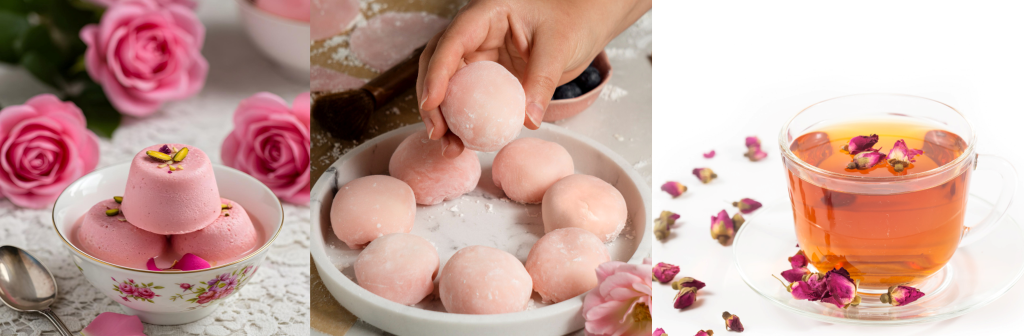
- Rose Tea: Aromatic and balancing, especially suitable for women
- Rose Tofu Pudding: Smooth, floral, and perfect as a summer dessert
- Rose Jam and Snow Skin Mooncakes: Fragrant with elegant appearance
- Rose Mochi: A fusion of Eastern and Western dessert styles
- Candied Rose Petals: Can be enjoyed as jam, in tea, or with yogurt — beautifying and digestive
📝 Conclusion
The rose flower — a gentle yet potent herb — carries the TCM wisdom of “preventive care.” From its rich aroma to its therapeutic essence, it regulates emotions and nourishes the body.
When feeling emotionally down or qi stagnated, why not brew a cup of rose tea? Let this graceful flower warm your heart and body with the timeless wisdom of traditional Chinese medicine.
此文章还有以下语言版本:
 简体中文 (Chinese (Simplified))
 Melayu (Malay)
