
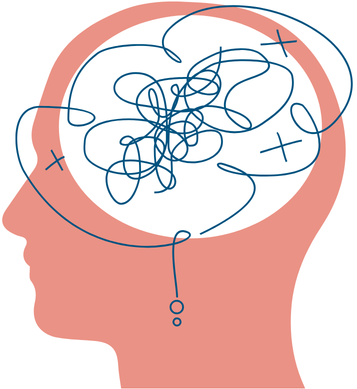
What Is Brain Fog?
Brain fog is a state of reduced mental clarity that may affect concentration, memory, and thinking ability. People experiencing brain fog often describe it as feeling mentally “cloudy,” forgetful, mentally exhausted, or unable to think clearly. In simple terms, it can feel as though the brain is no longer functioning at its usual level (Gleneagles Hospital, 2026). When prolonged, brain fog may begin to affect work performance, studies, and daily life.
Common Symptoms of Brain Fog Include:
- Difficulty concentrating
- Becoming more forgetful than usual
- Slower thinking or mental processing
- Mental fatigue or low energy
- Feeling irritable, stressed, or anxious
- Poor sleep quality or vivid dreams
- Persistent physical tension

Two Common Causes of Brain Fog: Stress vs Physical Imbalance
First: Stress-Related Brain Fog
This is one of the most common types of brain fog. Long-term stress can keep the body and mind in a constant state of tension or “survival mode.” When the body is unable to fully relax and recover, the brain may also struggle to get adequate rest. Over time, this may lead to poor concentration, mental fatigue, and difficulty thinking clearly.
A common pattern: Symptoms often become worse during stressful periods and improve during rest.
Second: Brain Fog Related to Physical Imbalances
If you have already tried resting, relaxing, or improving your sleep routine but brain fog continues — or becomes worse — it may be worth looking into other possible physical causes:
1. Iron deficiency or anemia
2. Thyroid dysfunction
3. Blood sugar fluctuations or irregular eating habits
4. Medication side effects

How Does Traditional Chinese Medicine (TCM) Understand Stress-Related Brain Fog?
Although “brain fog” is not a formal term in TCM, similar presentations are often described as poor memory, mental fatigue, forgetfulness, or lack of mental clarity. In TCM, focus, concentration, and cognitive function are closely related to the “Shen” (Mind). Healthy mental function depends on sufficient Qi (vital energy) and Blood nourishment, together with balanced internal organ function.
Brain fog is often not caused by a single factor but rather reflects a longer-term imbalance within the body. Three commonly seen TCM patterns include:
1. Liver Qi Stagnation Pattern
Common signs: Chest tightness, frequent sighing, neck and shoulder tension, poor sleep, irritability, and an overactive mind that feels difficult to switch off.
2. Heart-Spleen Deficiency Pattern
Common signs: Forgetfulness, poor concentration, mental fatigue, light sleep or vivid dreaming, poor appetite, and digestive discomfort such as loose stools.
3. Spleen Deficiency with Dampness Pattern
Common signs: Feeling mentally heavy or foggy, waking up feeling unrefreshed, physical heaviness, fatigue, oily skin or scalp, and sticky or poorly formed stools.
In clinical practice, these patterns may overlap. For example, Liver Qi stagnation may coexist with Spleen deficiency, or Heart-Spleen deficiency may occur together with Dampness accumulation.
A proper TCM consultation and pattern differentiation are important in identifying the most suitable treatment approach.
How Can You Relieve Stress-Related Brain Fog?
1. Improve your diet: Increase your intake of quality protein, dark leafy greens, and nutrient-rich foods. Take your meal on time.
2. Exercise regularly: Walking, stretching, yoga, or light exercise may help improve circulation and reduce stress.
3. Warm foot soak: Soak your feet in warm water for 15 minutes, 2–3 times per week to improve blood circulation.
4. Improve your sleep routine: Try to sleep before 11 PM whenever possible to have adequate rest.

When Should You Seek Professional Medical Advice?
If self-care strategies do not help, brain fog continues to worsen, or symptoms such as speech difficulty, significant dizziness, or limb weakness occur, seek professional medical evaluation early.
Final Thoughts
Sometimes, brain fog is not a sign that you are not trying hard enough — it may simply mean your body has been under too much strain for too long. Brain fog could be your body’s way of telling you that it is time to slow down, rest, and take better care of yourself.
Reference:
Gleneagles Hospital. (2026) (2026). Managing Brain Fog. Health Digest. Retrieved from: https://gleneagles.com.my/health-digest/managing-brain-fog
此文章还有以下语言版本:
 简体中文 (Chinese (Simplified))
  Melayu (Malay)
