
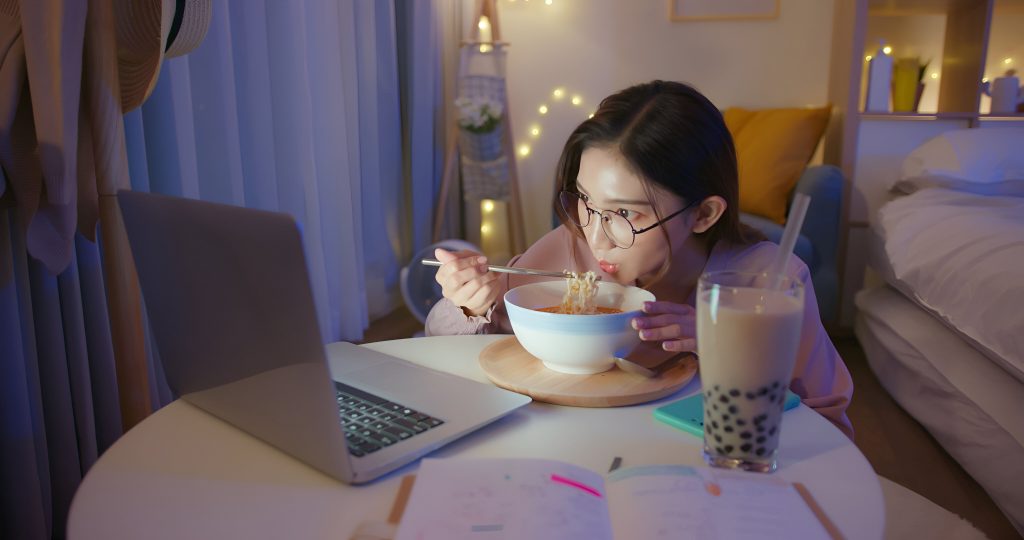
In modern society, late-night snacking has become a popular habit, especially with fast-paced urban lifestyles, late-night work, and social culture. Many people find themselves eating after 10 PM, treating it almost like a daily ritual. However, consistently eating late at night can bring various negative health effects. That said, if late-night snacking is truly unavoidable, choosing healthier options can help reduce the harm to the body.
1. Dangers of Late-Night Snacking
1.1 Increases Risk of Obesity
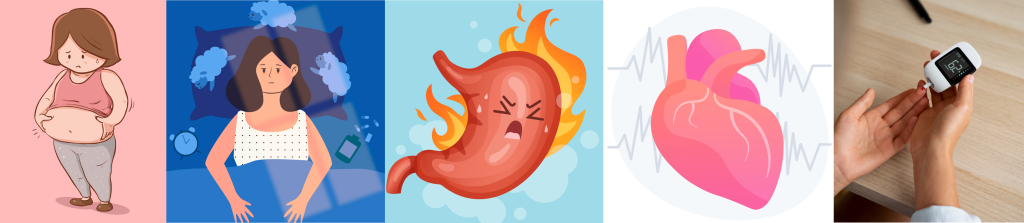
Late-night snacks are often high in calories and fat—like fried chicken, barbecue, and instant noodles. These foods are calorie-dense and prone to fat accumulation. Since the body’s activity level drops at night and energy expenditure is low, excess calories are easily stored as fat, leading to gradual weight gain.
1.2 Affects Sleep Quality
Consuming greasy or spicy food at night can stimulate acid production in the stomach, causing discomfort such as bloating, acid reflux, and heartburn. These symptoms can disrupt sleep and even lead to insomnia.
1.3 Increases Risk of Digestive Problems
Regular late-night eating disrupts the body’s normal digestive rhythm. The digestive system doesn’t get enough rest, which may lead to chronic issues like gastritis or stomach ulcers. Especially when people go to bed before fully digesting their food, it places an additional burden on the stomach.
1.4 Harms Cardiovascular Health
Late-night snacks tend to be high in sodium and fat. Overconsumption can raise cholesterol, blood sugar, and blood pressure, increasing the risk of cardiovascular diseases. For older adults or those with existing health conditions, late-night eating can be particularly risky.
1.5 Disrupts Hormonal Balance
Nighttime eating can interfere with the body’s natural hormonal cycles, especially those regulating insulin, leptin, and ghrelin. Over time, this may contribute to insulin resistance and increase the risk of developing type 2 diabetes.
2. How to Eat Late-Night Snacks Healthily
Although late-night eating has its downsides, there are scenarios—like late work shifts, nighttime studying, or post-exercise recovery—where eating a small meal might be necessary. In these cases, choosing the right foods and habits is key.
2.1 Time Your Snack Wisely
It’s best to eat your late-night snack at least 1.5 to 2 hours before bedtime. This gives your stomach enough time to digest and helps prevent digestive discomfort or disrupted sleep.
2.2 Choose Low-Fat, Easy-to-Digest Foods
Avoid fried, grilled, or spicy foods. Opt for light, low-fat options that are easier on the digestive system, such as:
- Plain congee with some vegetables
- Boiled eggs
- Plain oatmeal
- Warm milk
- Unsweetened soy milk
- Fruits like bananas or apples (preferably not cold)
These foods help satisfy hunger without burdening the body.

2.3 Watch Your Portion Size
The purpose of a late-night snack is to ease hunger, not to replace a full meal. Keep portions small—ideally no more than 70–80% full—to avoid calorie overload.
2.4 Balance Your Nutrients
Aim for a healthy mix of complex carbohydrates and protein. This helps maintain stable blood sugar levels and avoids overstimulating insulin production. For example, whole grain bread with a boiled egg or millet porridge with tofu are good combinations.
2.5 Avoid Caffeine and Sugary Drinks
Caffeine-containing drinks like coffee and tea, and high-sugar drinks such as soda, can interfere with sleep and add unnecessary calories. These are best avoided before bedtime.
3. Who Should Avoid Late-Night Snacks?
Late-night eating is not suitable for everyone. The following groups should be especially cautious:
- People who are overweight or obese
- Diabetics
- Individuals with high blood pressure or high cholesterol
- Those with gastrointestinal issues
- People with sleep disorders
If these individuals need to eat late at night, it’s strongly recommended that they do so under the guidance of a healthcare provider or nutritionist.
In conclusion, while late-night snacks may provide temporary satisfaction and comfort, unchecked and frequent indulgence can harm your health over time.
We should view late-night eating with caution and avoid turning it into a habit. If it’s unavoidable, learning to snack wisely can reduce the negative impact. Follow the principles of “appropriate time, portion, and choice,” and you’ll be able to meet your needs without compromising your health.

此文章还有以下语言版本:
 简体中文 (Chinese (Simplified))
  Melayu (Malay)
