

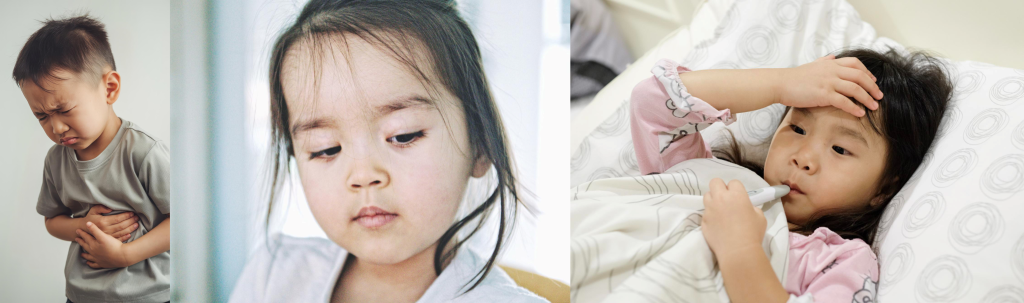
Recently, with the fluctuating weather, I frequently encounter pediatric patients presenting with persistent coughs. Coughing is a major concern for parents: some children experience prolonged episodes lasting weeks or even months; others cough so intensely that they vomit, lose their appetite, or have difficulty sleeping at night. Naturally, parents feel worried and anxious witnessing these symptoms.
Many parents inquire:
“Why does my child’s cough persist for so long? Is it because their respiratory system is weak and needs tonifying foods?”
From a Traditional Chinese Medicine perspective, cough is indeed linked to the lungs, but it’s not solely a matter of “lung deficiency.” An ancient Chinese saying states: “All organs can contribute to coughs, not just the lungs.” In other words, while cough manifests in the respiratory system, the root causes may also involve the digestive organs (spleen and stomach), emotional factors (liver), or overall strength and recovery (kidneys).
The Relationship Between Organs and Cough
| Related Organs | Potential consequences of imbalance |
| Lungs | More likely to cough during sudden temperature changes or when exposed to wind |
| Spleen and Stomach | Prone to food stagnation and cause phlegm production, Phlegm can block the airways, Prolong cough |
| Liver (emotions) | Cough tends to worsen when the child cries, gets upset, or has poor sleep |
| Kidney | Cough is milder during the day but worsens at night, sometimes with wheezing, Prolonged coughs are harder to recover from |
How to Differentiate Between Various Types of Coughs?

- Cold-Induced Cough
Cause: Typically triggered by exposure to cold weather or cold air, such as air conditioning.
Symptoms: Frequent cough, deep cough sounds, thin and clear phlegm, itchy throat, nasal congestion or runny nose. - Heat-Related Cough
Cause: Usually associated with febrile illnesses or internal heat accumulation.
Symptoms: Harsh or loud cough, thick yellow thick phlegm, sore throat, yellow nasal discharge. - Phlegm-Heat Cough
Cause: Common in children with persistent cough progressing to heat, or from excessive intake of fried, spicy, or dry foods.
Symptoms: Cough producing copious sticky yellow phlegm, shortness of breath during severe coughing, thirst.
- Phlegm-Dampness Cough
Cause: Frequently seen in children with spleen and stomach weakness leading to dampness retention.
Symptoms: Cough with abundant thin, clear phlegm, rattling sound of phlegm in the throat, poor appetite. - Qi-Deficiency Cough
Cause: Often occurs in children with constitutional weakness or during recovery after illness.
Symptoms: Persistent, slow-healing cough, weak cough sounds, shortness of breath, fear of cold. - Yin-Deficiency Cough
Cause: Often seen in children who have had repeated coughing or fevers, also be triggered by hot, dry weather or staying in an overly dry environment
Symptoms: Dry cough with little or no phlegm, itchy throat or hoarse voice, coughing that is more obvious at night or during sleep.
How Can Parents Care for Their Child at Home?
1. Cold-Induced Cough
Avoid: Watermelon, coconut water, pears, cold drinks
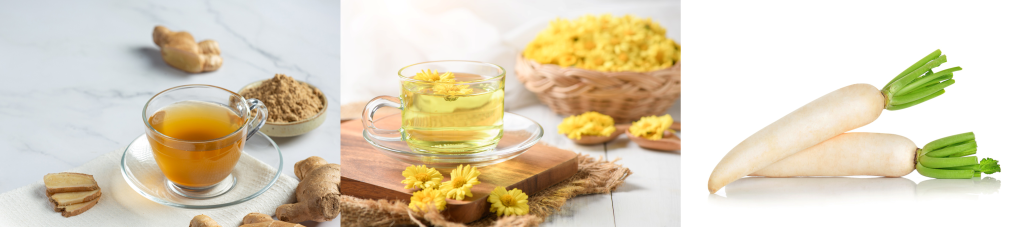
Recommended Foods: Ginger water or ginger porridge, Red date–ginger–licorice soup
2. Heat-Related Cough
Avoid: Fried foods, barbecue, spicy foods
Recommended Foods: Steamed pear, white radish soup, chrysanthemum tea
3. Phlegm-Heat Cough
Avoid: Fried chicken, chips, chocolate, milk tea
Recommended Foods: Winter melon soup, white radish soup

4. Phlegm-Dampness Cough
Avoid: Cold drinks, desserts, creamy cakes, soft drinks
Recommended Foods: Chinese yam porridge, barley water
5. Qi-Deficiency Cough
Avoid: Raw, cold, or greasy foods; excessive snacks
Recommended Foods: Chinese yam and lotus seed porridge, lean meat porridge, steamed egg custard
6. Yin-Deficiency Cough
Avoid: Spicy foods, fried foods, biscuits and dry snacks
Recommended Foods: Warm honey water, white fungus (snow fungus) soup, steamed pear
Coughing is not merely a sign of “weak lungs” or a single symptom; it serves as an indicator that the child’s overall internal balance are disrupted.
Traditional Chinese Medicine adopts a holistic approach, examining not only pulmonary function but also the digestive system, emotional health, and immune resilience. By accurately diagnosing the specific type of cough and implementing tailored dietary and lifestyle modifications, we can alleviate immediate symptoms while simultaneously enhancing the child’s constitutional strength, thereby reducing future susceptibility to illness and promoting overall well-being.
此文章还有以下语言版本:
 简体中文 (Chinese (Simplified))
 Melayu (Malay)
