

Presbyopia, also known as aging eyes or farsightedness, is a physiological phenomenon and not a pathological or refractive error condition. It is a common visual problem that often occurs as people enter old age and serves as one of the signals of the body’s aging process.
As age advances, the crystalline lens in the eye gradually hardens and thickens, and the ability of the eye muscles to adjust diminishes, resulting in reduced focusing ability. Consequently, when looking at close objects, the image cannot be fully focused on the retina, leading to blurred vision.

The occurrence of presbyopia is directly related to our age, with most cases arising after the age of forty-five. The onset and severity of presbyopia are also influenced by other factors. Despite taking measures to protect the eyes, the degree of farsightedness tends to increase with age, typically progressing at a rate of 50 degrees every 5 years.
According to the corresponding table of age and degree of presbyopia, for individuals with good vision, meaning those without myopia or hyperopia, the degree of presbyopia is usually around 100 degrees at the age of 45, increasing to 200 degrees at 55, and reaching 250 to 300 degrees at around 60. After that point, the degree of presbyopia generally stabilizes and no longer deepens.
Ways to Improve Presbyopia
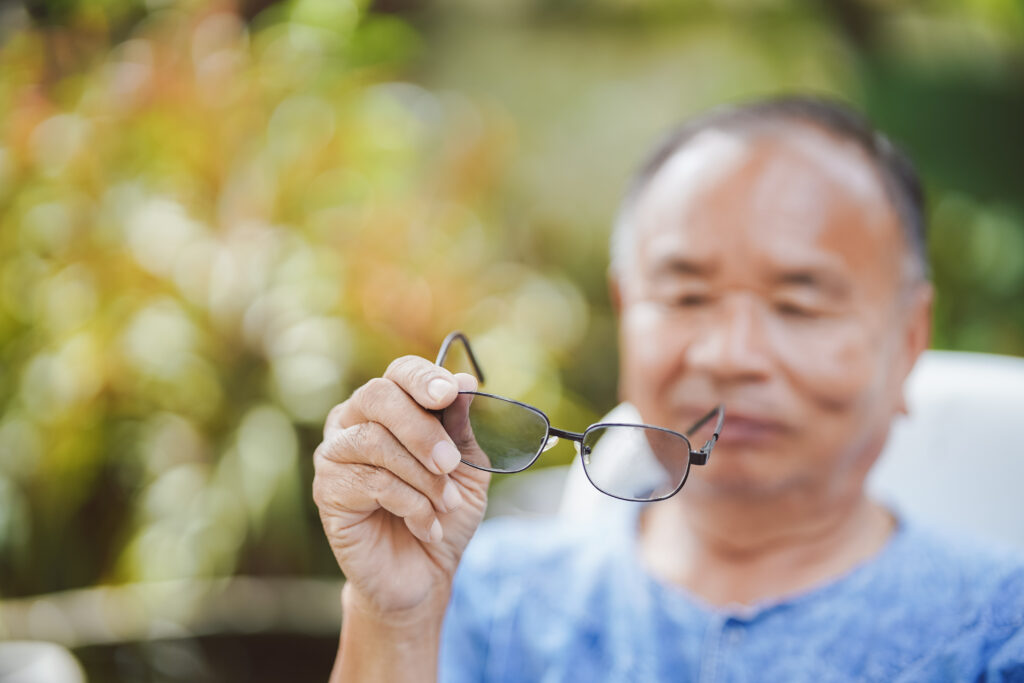
1)Wearing reading glasses:
the simplest and most effective method to correct presbyopia. As the degree of presbyopia changes with age, the strength of reading glasses needs to be adjusted accordingly.
2)Massaging the area around the eyes:
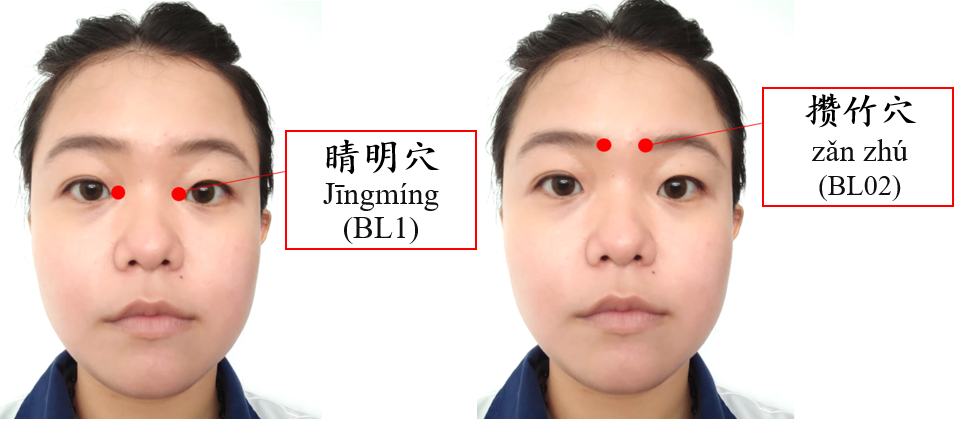
have a certain improvement on presbyopia. Traditional Chinese medicine believes that “vision is affected by blood.” Massaging acupoints around the eyes can enhance blood circulation in the eye area, effectively improving vision and alleviating presbyopia. The specific method is to press the “Jingming” acupoint on the inner corner of the eye with the tips of the index fingers for about half a minute until the local skin becomes slightly red and warm, and there is a mild sense of soreness. Then, use the back of the thumbs to massage the temples on both sides (where the eyebrows are furrowed) for one minute, once in the morning and once in the evening.
3)Dietary therapy:
According to TCM, presbyopia is mainly due to the natural aging of the spleen, stomach, liver, and kidneys, leading to the inability of vital essence (Qi) to nourish the eyes. Therefore, dietary therapy can be used to treat presbyopia. Elderly individuals with presbyopia can consume more black beans, black sesame, goji berries, and chrysanthemum in the form of soups or porridge. It is also important to consume foods rich in vitamin A and B, such as animal livers, soy products, eggs, green leafy vegetables, carrots, pumpkins, walnuts, and lychee.

4)Hot compress:
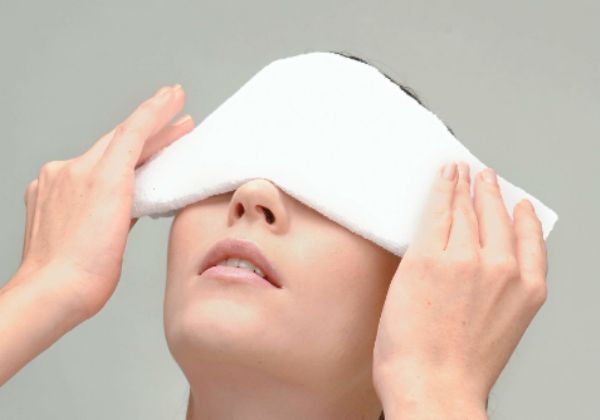
can also be used to prevent and treat presbyopia. First, fold a special towel into a double layer and soak it in hot water. Take it out, wring it dry, and let it cool slightly to a comfortable temperature before placing it over the eyes. Keep the eyes open during the hot compress to allow the heat to directly affect the eyeballs. After the towel cools down, soak it in water, wring it dry, and apply it to the eyes again. Repeat this process three times. After the hot compress, combine it with massaging the eye corners, eyeballs, eye sockets, and temples.
5)Exercise your eyeballs to keep them active:
The specific method is as follows: Stand with your feet shoulder-width apart, chest out, and slightly tilt your head back. Open your eyes wide and try to keep the eyeballs moving continuously. First, rotate them from right to left 10 times, and then from left to right 10 times. After resting for 10 minutes, repeat the exercise for a total of 3 times. This method can help refresh the mind and improve vision.
6)Oral Chinese herbal medicine:
TCM believes that presbyopia is mainly due to deficiency of the liver and kidneys, resulting in inadequate essence and blood supply. Therefore, oral Chinese herbal medicine, such as Qi Ju Di Huang Wan, Shi Hu Ye Guang Wan, acupuncture, massage, and herbal application, can be used to nourish the liver and kidneys, clear the liver, and improve vision for presbyopia.

7)Surgical treatment:
although the correction of presbyopia through surgery is not perfect at present, but with the continuous research and progress of surgical techniques, there is a trend of diversification of surgical methods. Depending on the surgical site, it can be divided into three categories: corneal refractive surgery, lens refractive surgery, and scleral refractive surgery.

Medicinal diet recommendation
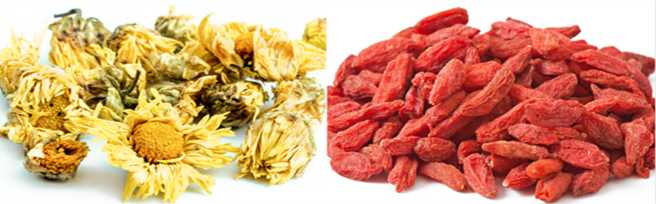
1) Chrysanthemum and wolfberry tea:
5 grams chrysanthemum, 5 grams wolfberry
Serving instructions: Brew with boiling water, as a substitute for tea, 1 dose per day, and insisted on taking it for more than 3 months.It has the effects of nourishing the liver and kidney, clearing the liver and improving eyesight. It is especially suitable for those with presbyopia and blurred vision.
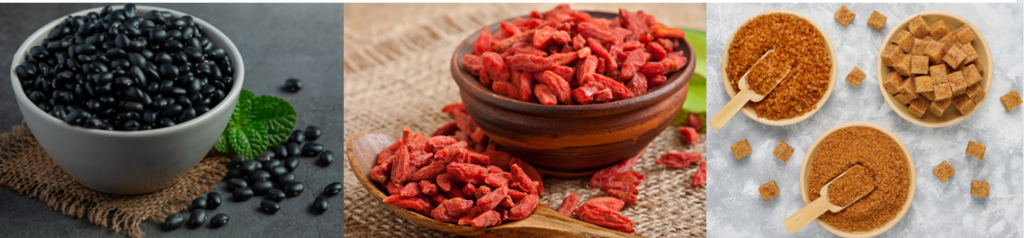
2) Black beans and wolfberries:
Black beans 500 grams, wolfberries 50 grams, brown sugar 100 grams
Remove the impurities from black beans, wash the black beans with cold water, add 50 grams of wolfberries to every 500 grams of black beans, boil them in a pot. Boil over high heat then simmer over low heat. When the water is boiled dry, the beans are cooked. For every 500 grams of black beans, add 100 grams of brown sugar. Stir the brown sugar into the black beans with water, then cook slowly until the water is dry. Let it cool and save it for later.
Serving instructions: Every morning and evening, two spoons of black bean wolfberry, chew and swallow, drink some boiled water. Perennial persistence can protect the kidneys and eyes.
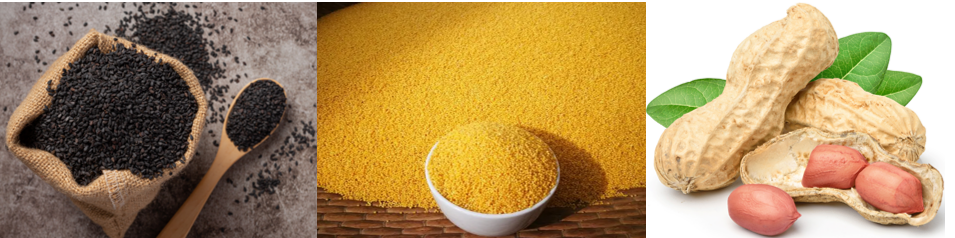
3) Black sesame peanut porridge:
Black sesame 10 grams, peanut kernels 20 grams, millet 100 grams
Add appropriate amount of water to the above food and cook porridge.
Serving instructions: Take it once a day in the morning and evening, for more than 3 months.
***The medicated diet is for reference only. If you feel any discomfort after taking it, please stop immediately. If you have any questions, please consult a Chinese physician or professional.
此文章还有以下语言版本:
 简体中文 (Chinese (Simplified))
  Melayu (Malay)
