
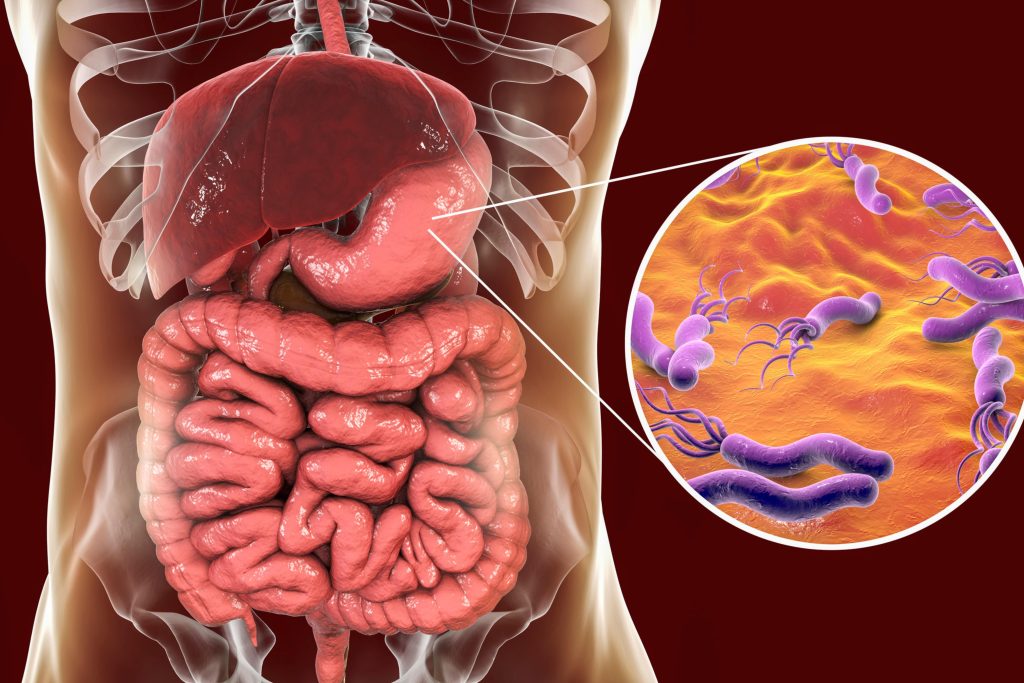
What is Helicobacter Pylori?
- Helicobacter pylori (commonly referred to as H. pylori or HP) is a microaerophilic, spiral-shaped bacterium that can colonize and survive in the human stomach. It has strong motility and reproductive capabilities, and adheres to the gastric mucosa and intercellular spaces.
- It is the only known bacterium capable of surviving in the highly acidic environment of the stomach.
- H. pylori infection has been classified by the World Health Organization (WHO) as a Group I carcinogen for humans of gastric cancer.
Risks of Helicobacter pylori Infection
- Among individuals infected with H. pylori, approximately:
- 15%–20% develop to peptic ulcers
- 5%–10% experience with dyspepsia (indigestion)
- Around 1% may develop to malignant gastric tumors, including gastric cancer and mucosa-associated lymphoid tissue (MALT) lymphoma
Modes of Transmission
- Humans are the only reservoir of Helicobacter pylori, the bacteria primarily residing in human saliva, dental plaque, the stomach, and feces.
- Routes of transmission include:
- Oral-to-oral: sharing utensils or drinking cups
- Gastro-oral: gastric contents reflux into the mouth and transmitted through saliva
- Fecal-oral: bacteria are excreted in feces and transmitted via contaminated hands or surfaces
Modes of Transmission:
- Consuming contaminated food or water
- Transmission through sharing meals or eating utensils
- Transmission through kissing
- Mother-to-child transmission

What are the symptoms may appear after infection?
After Helicobacter pylori infection, about 70% of infected individuals do not show any symptoms. It is often difficult to detect unless specific tests such as the Carbon-13 urea breath test or a gastroscopic biopsy performed by a gastroenterologist.
1. Main symptoms include acid reflux, heartburn, stomach pain, and bad breath.
2. It can cause chronic gastritis, with typical symptoms such as upper abdominal discomfort, dull pain, belching, acid reflux, nausea, and vomiting. The course of the disease is slow but tends to recur.
3. It may lead to gastric mucosal damage, with a wide variety of clinical presentations. Many patients experience acid reflux, belching, and a feeling of fullness.
Characteristics of H. pylori infection in children:
1. The risk of developing serious illness from H. pylori infection in children is very low. Most infected children show no obvious symptoms, while a small number may experience digestive symptoms such as abdominal discomfort, nausea, vomiting, or acid reflux.
2. The reinfection rate after eradication of H. pylori tends to be higher in children compared to adults. In contrast, the reinfection rate in adults after successful eradication is relatively low.
3. During growth and development, children have a certain rate of spontaneous clearance, estimated at around 10%. However, in adults, H. pylori infection typically does not resolve on its own without treatment.
How is H. pylori infection screened?
- Invasive test – Gastroscopic biopsy
- A gastroscopy allows direct visualization of the stomach lining and also enables tissue samples to be taken for biopsy. During the biopsy, Helicobacter pylori can be detected.
- If H. pylori is found to be positive, a bacterial culture and antibiotic susceptibility test can be performed. This helps guide appropriate medication for treatment.
- Non-invasive Tests
1. Breath test:
This includes the Carbon-13 or Carbon-14 urea breath test. It is simple and quick—patients only need to “blow into a device” to detect the presence and amount of Helicobacter pylori in the body. With an accuracy of over 95%, it is the preferred method for diagnosing H. pylori infection.
2. Blood Antibody Test:
This test detects H. pylori antibodies in the blood to determine if there has been an infection. However, it can only show past exposure and cannot accurately confirm current active infection.
3. Stool Antigen Test:
This test is relatively simple and non-invasive, as it does not require internal sampling. It has good sensitivity and specificity for detecting current active infection, although results can be affected by various external factors.
Can utensils used by someone with Helicobacter pylori infection still be contagious a few hours after being cleaned?
- Helicobacter pylori is a bacterium that requires very specific conditions to survive. It is microaerophilic, meaning it does not live well outside the human body.
- At room temperature, H. pylori can survive on surfaces for no more than about 90 minutes. So, on utensils previously used by an infected person, the bacteria can only live for around one hour and the half. Over the time, the bacterial count gradually decreases until they die off.
- Therefore, in general, if the utensils have been properly washed and left to dry, using them a few hours later almost no risk of H. pylori transmission.
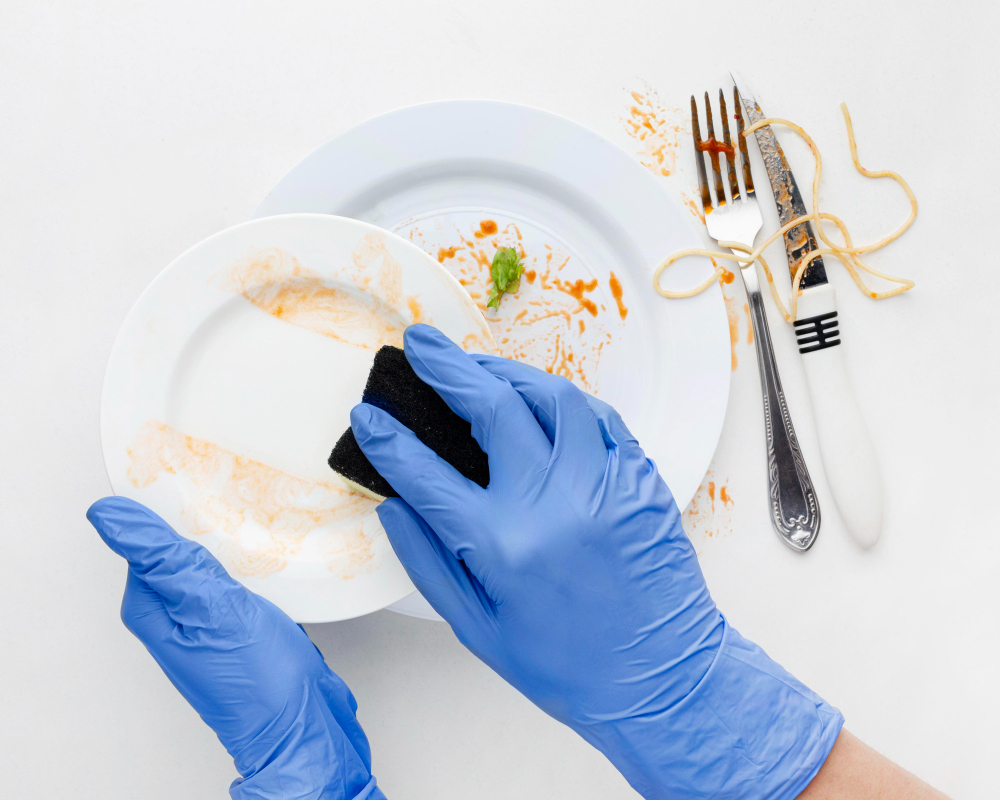
How to prevent H. pylori infection in daily life?
1. Develop healthy dining habits:
- Use serving chopsticks and spoons when sharing dishes
- Reduce dining out; eat at home as much as possible
- If a family member is infected with H. pylori, they should use separate utensils
- Provide children with their own dedicated utensils to avoid sharing with adults
- Avoid kissing children on the mouth
2. Maintain good hygiene practices
- Sterilize and replace utensils regularly
- Wash hands thoroughly before meals and after using the toilet
- Do not share personal items such as toothbrushes or cups; maintain good oral hygiene
3. Maintain a healthy diet and lifestyle
- Ensure food safety and cleanliness
- Avoid eating raw food and drinking untreated water
- Maintain a healthy lifestyle
- Quit smoking and limit alcohol consumption
- Keep a positive mental state
- Get enough sleep
- Exercise regularly to strengthen the immune system
4. Get regular health check-ups
- If you have warning signs of stomach cancer (such as gastrointestinal bleeding, vomiting, weight loss, or an upper abdominal mass), or if you are at high risk for gastric cancer, early cancer screening with endoscopy is recommended.
此文章还有以下语言版本:
 简体中文 (Chinese (Simplified))
  Melayu (Malay)
